
Pay to Play: When Sponsored Content Is Worth It — And When It Isn't
There are many things that divide earned and paid media, and one thing that unites them: misconceptions.
"If it's not earned, it's not worth it."
"Paid is easy."
"They'll take anything if the price is right."
None of those are true. So how do you know if paid is worth the investment – and when it’s not? And how does its value hold up against the holy grail of earned? Let’s get into it.
When should I pay for media coverage?
There are several good reasons to consider sponsored content. Here are a few.
You Need Cred
This often means you're new. You've started a business, and as a founder, awareness is key. But trust and credibility are essential for winning those first clients and customers—not to mention investors. Journalists will naturally be wary, especially pre-launch. You're just not real enough yet. Everyone and their dog wants to launch something. Only a fraction actually make it happen.
Enter paid. A great sponsored feature can pique interest, get your name and story out there, and start building an audience. Tedy—a startup in the employee benefits space—worked with The Toronto Star, and I can't count the number of times I've seen that placement pop up in my LinkedIn feed. One placement. Months of visibility.
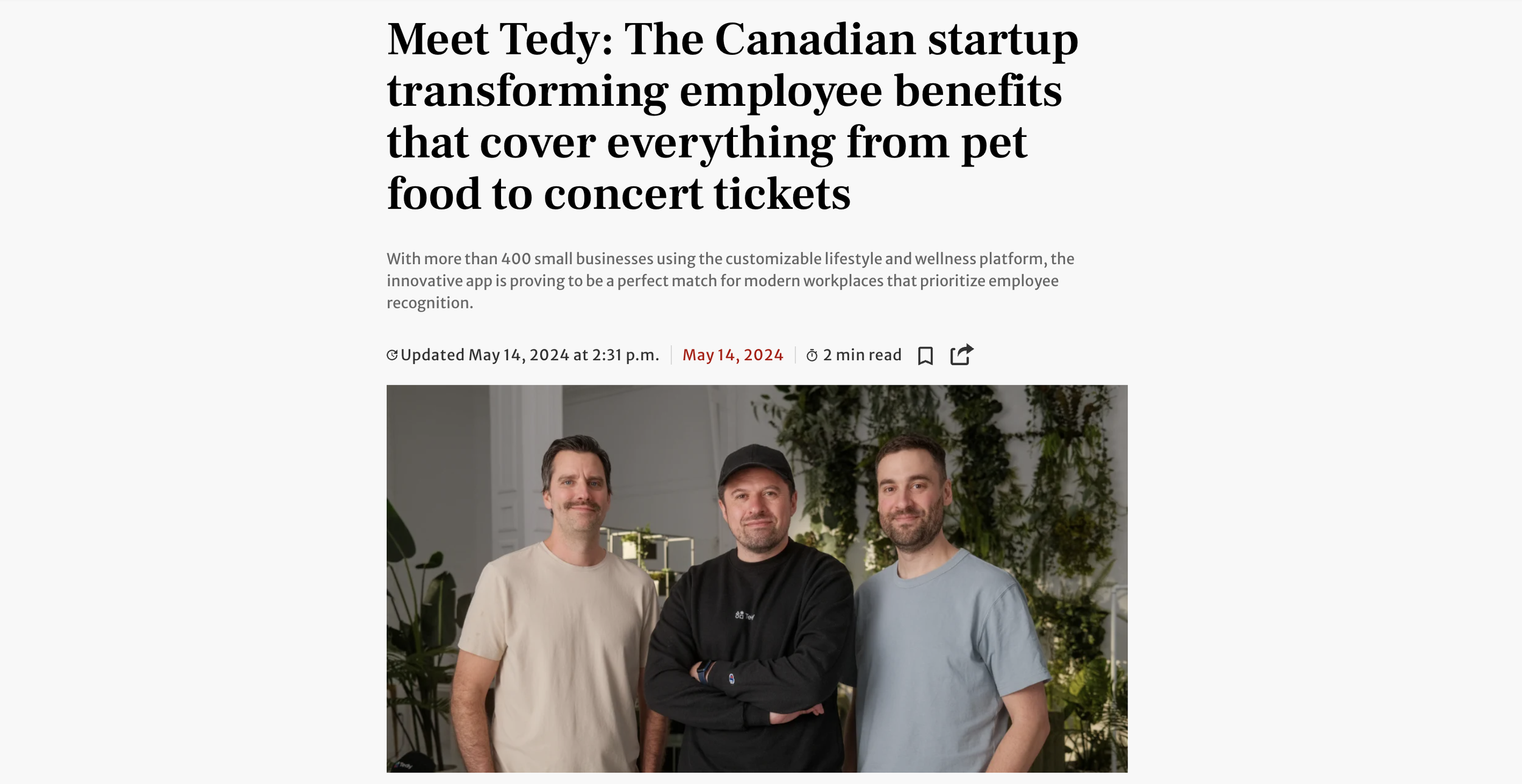
Courtesy: Toronto Star
You're looking to build momentum.
Pitch a journalist, and if they're at all interested, one of the first things they're going to do is Google you. No search results? Tough sell. As a journalist, you're looking for signals. Is this company real? Has anyone else written about them? Is there evidence they're actually building something people care about?
If we see your name associated with a respected news organization—even on the sponsored side—some of that hesitation starts to disappear. Not all of it. But some.
A couple of well-told sponsored placements can crack the door open for smaller earned opportunities. Smaller earned coverage leads to bigger opportunities. Momentum builds. Call it FOMO-fuelled media attention. A little coverage has a funny way of attracting more media attention.
You need to reach a targeted audience.
You know your audience—or at least you should. And you should know where they get their trusted information. (If not, give us a call.)
Maybe that's a trade publication. Maybe it's an industry newsletter. Maybe it's a business publication your customers read every morning. Increasingly, it’s Substack.
If those channels are locked down on the earned side, sponsored content can be a smart and effective option, especially when you're working with an editorial team that knows how to tell a story, not just sell a product.
Done well, you're not just buying space. You're buying access to an audience that's already paying attention.
Earned just isn't going to happen... yet.
This is a tough one for founders to digest. Many falsely view sponsored content as the last resort. In reality, earned media is hard. And your launch or new product is a hard sell. Unless it's truly revolutionary, the journalist on the other end is going to have to justify why this deserves to be a story—not a commercial.
Paid makes sense when it's built into a strategy that includes earned media, creators, thought leadership, owned content and sponsorships. It becomes one layer in a much bigger plan. Sometimes you need to crawl before you can run. The goal isn't to replace earned media. It's to build enough awareness and credibility that earned media becomes much more likely.
When is sponsored content just not worth it?
Just because you can pay for coverage doesn't mean you should. If you're buying a placement because the logo looks impressive, think twice. If the publication isn't trusted by the audience you're trying to reach, save your money.
If you're hoping sponsored content will make up for the fact that you don't actually have a compelling story, it won't.
And if your plan ends the day the article is published, you've missed the point.
The best sponsored placements don't end with that one piece of coverage. They become sales tools. LinkedIn content. Website proof points. Something you include in future media pitches. They help build the next opportunity.
The bottom line
Opinions on paid are strong – too strong. Most PRs either push it way too hard or dismiss it entirely. The truth, as with most things, lies somewhere in between.
The best sponsored placements don't feel like ads. They feel like stories. There's editorial value. They're building toward something bigger. There is intention.
But you still need a strong story. A weak story is still a weak story – even with dollar signs attached. And those respected outlets you have your eye and want to be associated with aren't going to say yes to a weak story.
Yes, the nuance can be difficult to navigate. (Again, give us a call.) At the end of the day, earned and paid are different tools for different jobs. But the strongest communications strategies recognize how they can work together and choose to use both.